
promise A+
promise A+
promise A+规范
Promise/A+规范一共有10条规范,具体如下:
- Promise 状态
Promise 有三种状态:pending(进行中)、fulfilled(已成功)和rejected(已失败)。
- then 方法
Promise 必须提供 then 方法,用于注册在 Promise 状态确定后的回调函数。
- then 方法的参数
then 方法必须接收两个函数作为参数,分别为 Promise 状态被 fulfilled 时的回调函数 onFulfilled 和 Promise 状态被 rejected 时的回调函数 onRejected。
- then 方法的返回值
then 方法必须返回一个新的 Promise 对象,用于链式调用。
- then 方法的调用时机
onFulfilled 和 onRejected 只有在 Promise 状态确定后才会被调用,且调用次数不超过一次。
- then 方法的调用顺序
then 方法可以被同一个 Promise 对象多次调用,并且必须按照其注册顺序依次执行。
- then 方法的异常处理
如果 onFulfilled 或 onRejected 抛出异常,则新的 Promise 对象必须被 rejected。
- then 方法的参数可选
then 方法的参数 onFulfilled 和 onRejected 是可选的。
- Promise 解决过程
Promise 解决过程是指 Promise 从初始状态开始,最终转换为 fulfilled 或 rejected 的过程。
- Promise 解决过程的处理
Promise 解决过程中需要进行一系列的处理,包括状态转换、回调函数的调用、异常处理等。其中,then 方法的返回值需要根据 Promise 的状态和回调函数的返回值进行判断。
Promise的完整源码
INFO
Promise/A+规范的实现
在以下代码中,我们使用了类的形式来实现Promise。在构造函数中,我们初始化了Promise的状态、值和原因,并且定义了一个存储回调函数的数组。然后,我们定义了两个函数resolve和reject,用于将Promise的状态从pending改变为fulfilled或rejected,并且执行相应的回调函数。
在then函数中,我们判断当前Promise的状态,如果是fulfilled或rejected,则执行相应的回调函数,并且将返回值传入到resolvePromise函数中进行处理。如果是pending状态,我们将回调函数存储到数组中,等待Promise状态改变后再执行。 在catch函数和finally函数中,我们都是调用then函数,只是传入的回调函数不同。
在Promise.all方法中,我们返回一个新的Promise,并且等待传入的所有Promise全部解决后才返回结果。我们使用result数组保存每个Promise的解决值,并且使用counter变量记录已经解决的Promise数量。如果所有Promise都解决了,我们将result数组传递给新的Promise进行解决。如果有任何一个Promise被拒绝,我们直接拒绝新的Promise。注意,我们使用Promise.resolve方法将传入的值转换为Promise,以便在处理时统一处理。
最后,我们定义了resolvePromise函数,用于处理回调函数的返回值,并且将它们传递给下一个Promise。如果返回值是一个Promise,则需要等待它的状态改变后再执行下一个Promise的回调函数。如果返回值是一个普通值,则直接传递给下一个Promise。如果返回值是一个循环引用,则抛出异常。
class Promise {
  constructor(executor) {
    this.status = 'pending';
    this.value = undefined;
    this.reason = undefined;
    this.onResolvedCallbacks = [];
    this.onRejectedCallbacks = [];
    const resolve = (value) => {
      if (this.status === 'pending') {
        this.status = 'fulfilled';
        this.value = value;
        this.onResolvedCallbacks.forEach((fn) => fn());
      }
    };
    const reject = (reason) => {
      if (this.status === 'pending') {
        this.status = 'rejected';
        this.reason = reason;
        this.onRejectedCallbacks.forEach((fn) => fn());
      }
    };
    try {
      executor(resolve, reject);
    } catch (e) {
      reject(e);
    }
  }
  then(onFulfilled, onRejected) {
    onFulfilled = typeof onFulfilled === 'function' ? onFulfilled : (value) => value;
    onRejected =
      typeof onRejected === 'function'
        ? onRejected
        : (reason) => {
            throw reason;
          };
    const promise2 = new Promise((resolve, reject) => {
      if (this.status === 'fulfilled') {
        setTimeout(() => {
          try {
            const x = onFulfilled(this.value);
            resolvePromise(promise2, x, resolve, reject);
          } catch (e) {
            reject(e);
          }
        }, 0);
      }
      if (this.status === 'rejected') {
        setTimeout(() => {
          try {
            const x = onRejected(this.reason);
            resolvePromise(promise2, x, resolve, reject);
          } catch (e) {
            reject(e);
          }
        }, 0);
      }
      if (this.status === 'pending') {
        this.onResolvedCallbacks.push(() => {
          setTimeout(() => {
            try {
              const x = onFulfilled(this.value);
              resolvePromise(promise2, x, resolve, reject);
            } catch (e) {
              reject(e);
            }
          }, 0);
        });
        this.onRejectedCallbacks.push(() => {
          setTimeout(() => {
            try {
              const x = onRejected(this.reason);
              resolvePromise(promise2, x, resolve, reject);
            } catch (e) {
              reject(e);
            }
          }, 0);
        });
      }
    });
    return promise2;
  }
  catch(onRejected) {
    return this.then(null, onRejected);
  }
  finally(callback) {
    return this.then(
      (value) => Promise.resolve(callback()).then(() => value),
      (reason) =>
        Promise.resolve(callback()).then(() => {
          throw reason;
        })
    );
  }
  static resolve(value) {
    return new Promise((resolve) => {
      resolve(value);
    });
  }
  static reject(reason) {
    return new Promise((resolve, reject) => {
      reject(reason);
    });
  }
  static all(promises) {
    return new Promise((resolve, reject) => {
      const result = [];
      let counter = 0;
      promises.forEach((promise, index) => {
        Promise.resolve(promise)
          .then((value) => {
            result[index] = value;
            counter++;
            if (counter === promises.length) {
              resolve(result);
            }
          })
          .catch((reason) => {
            reject(reason);
          });
      });
    });
  }
}
function resolvePromise(promise2, x, resolve, reject) {
  if (promise2 === x) {
    return reject(new TypeError('Chaining cycle detected for promise'));
  }
  let called = false;
  if (x != null && (typeof x === 'object' || typeof x === 'function')) {
    try {
      const then = x.then;
      if (typeof then === 'function') {
        then.call(
          x,
          (y) => {
            if (called) {
              return;
            }
            called = true;
            resolvePromise(promise2, y, resolve, reject);
          },
          (r) => {
            if (called) {
              return;
            }
            called = true;
            reject(r);
          }
        );
      } else {
        resolve(x);
      }
    } catch (e) {
      if (called) {
        return;
      }
      called = true;
      reject(e);
    }
  } else {
    resolve(x);
  }
}
复习promise的使用
有三种状态,pending(进行中)、fulfilled(已成功)、rejected(已失败)
new promise(resolve,reject)会声明一个promise实例,执行resolve会走then方法中的第一个回调(成功),执行reject会执行then方法中的第二个回调(失败)。then方法中不论第一个回调还是第二个回调执行成功了会接着走下一个then中的第一个回调,如果报错了会走下一个then中的第二个回调。
// 非管控异步操作
new Promise((resolve, reject) => {
  // resolve 和 reject是自己任意执行的,但是一般情况下,大家够约定成功执行resolve,失败执行reject
  // excutor函数(执行函数)中可以不管控异步操作(但是不管控异步没什么意义)
  resolve(100);
}).then(result => {
  // resolve执行的时候会触发第一个回调函数执行
  console.log(1)
  return 1000; // 会把这个值传递给下一个then中的方法,如果返回的是一个新的promise实例,则等到promise处理完成,把处理完成的结果传递给下一个then
}, reason => {
  // reject执行的时候会触发第二个回调函数执行
  console.log(2)
}).then(result => { // 需要保证then方法返回的依然是promise实例,这样才可以实现链式调用
  // 上一个then中管控的两个方法只要任何一个执行不报错,都会执行这个then中的第一个方法,如果执行报错,会执行此then中的第二个回调函数
}).catch(reason=>{
  // catch就相当于then(null,reason=>{})
})
console.log(3)
// 等待所有的promise都成功执行then,反之只要有一个失败就会执行catch
Promise.all([promise1,promise2,promise3,promise4]).then();
封装基础版的promise库
没有实现then链
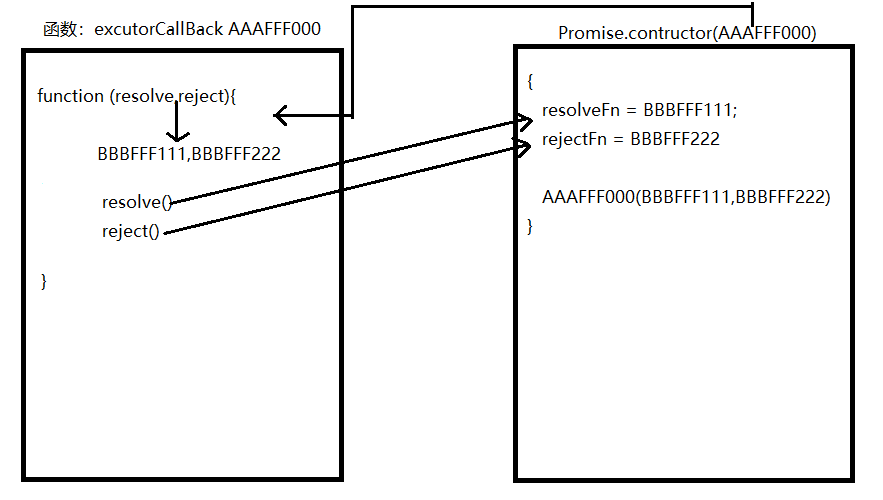
/* promise.js */
class Promise {
  constructor(excutorCallback) {
    this.status = 'pending'
    this.value = undefined;
    this.fulfilledAry = [];
    this.rejectedAry = [];

    // 执行excutor
    let resolveFn = result => {
      let timer = setTimeout(() => {
        clearTimeout(timer);
        if (this.status !== 'pending') return;
        this.status = 'fulfilled';
        this.value = result;
        this.fulfilledAry.forEach(item => item(this.value))
      }, 0);
    }
    let rejectFn = reason => {
      let timer = setTimeout(() => {
        clearTimeout(timer);
        if (this.status !== 'pending') return;
        this.status = 'rejected';
        this.value = reason;
        this.rejectedAry.forEach(item => item(this.value))
      }, 0);

    }
    excutorCallback(resolveFn, rejectFn)
  }

  then (fulfilledCallBack, rejectedCallBack) {
    this.fulfilledAry.push(fulfilledCallBack)
    this.rejectedAry.push(rejectedCallBack)
  }
}
// commonjs规范
module.exports = Promise;
/* test.js */
let Promise = require('./promise')
new Promise((resolve, reject) => {
  // resolve和reject只能执行一个,执行其中一个另一个就不会执行
  setTimeout(() => {
    Math.random() < 0.5 ? resolve(100) : reject(-100)
  }, 1000);
}).then(result => {
  console.log(result)
}, reason => {
  console.log(reason)
});

console.log(3)
异常报错按照rejected状态处理
/* promise.js */
class Promise {
  constructor(excutorCallback) {
    this.status = 'pending'
    this.value = undefined;
    this.fulfilledAry = [];
    this.rejectedAry = [];

    // 执行excutor(异常捕获)
    let resolveFn = result => {
      let timer = setTimeout(() => {
        clearTimeout(timer);
        if (this.status !== 'pending') return;
        this.status = 'fulfilled';
        this.value = result;
        this.fulfilledAry.forEach(item => item(this.value))
      }, 0);
    }
    let rejectFn = reason => {
      let timer = setTimeout(() => {
        clearTimeout(timer);
        if (this.status !== 'pending') return;
        this.status = 'rejected';
        this.value = reason;
        this.rejectedAry.forEach(item => item(this.value))
      }, 0);
    }
    try {
      excutorCallback(resolveFn, rejectFn)
    } catch (err) {
      rejectFn(err);
    }
  }

  then (fulfilledCallBack, rejectedCallBack) {
    this.fulfilledAry.push(fulfilledCallBack)
    this.rejectedAry.push(rejectedCallBack)
  }
}
// commonjs规范
module.exports = Promise;
/* test.js */
let Promise = require('./promise')
new Promise((resolve, reject) => {
  // resolve和reject只能执行一个,执行其中一个另一个就不会执行
  setTimeout(() => {
    // 定时器中不能手动抛异常
    Math.random() < 0.5 ? resolve(100) : reject(-100)
  }, 1000);
  throw new Error('ERROR');
}).then(result => {
  console.log(result)
}, reason => {
  console.log(reason)
});

console.log(3)
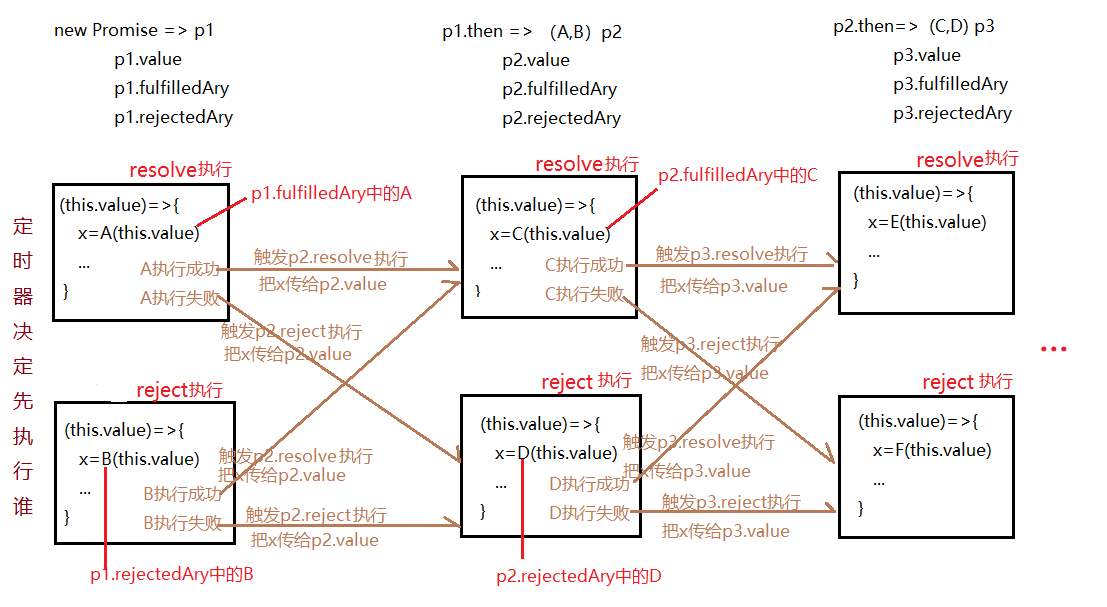
实现then方法的链式调用
// promise.js
class Promise {
  constructor(excutorCallback) {
    this.status = 'pending'
    this.value = undefined;
    this.fulfilledAry = [];
    this.rejectedAry = [];

    // 执行excutor(异常捕获)
    let resolveFn = result => {
      let timer = setTimeout(() => {
        clearTimeout(timer);
        if (this.status !== 'pending') return;
        this.status = 'fulfilled';
        this.value = result;
        this.fulfilledAry.forEach(item => item(this.value))
      }, 0);
    }
    let rejectFn = reason => {
      let timer = setTimeout(() => {
        clearTimeout(timer);
        if (this.status !== 'pending') return;
        this.status = 'rejected';
        this.value = reason;
        this.rejectedAry.forEach(item => item(this.value))
      }, 0);
    }
    try {
      excutorCallback(resolveFn, rejectFn); // 返回两个回调函数,每个回调函数都需要传参
    } catch (err) {
      rejectFn(err);
    }
  }

  then (fulfilledCallBack, rejectedCallBack) {
    // 返回一个新的promise实例
    return new Promise((resolve, reject) => {
      // this从上文找是最初的promise实例,不是最新的
      this.fulfilledAry.push(() => {
        try {
          let x = fulfilledCallBack(this.value);
          // 返回的x有可能是普通值也有可能还是一个promise实例
          x instanceof Promise ? x.then(resolve, reject) : resolve(x)
        } catch (err) {
          reject(err);
        }
      })
      this.rejectedAry.push(() => {
        try {
          let x = rejectedCallBack(this.value);
          x instanceof Promise ? x.then(resolve, reject) : resolve(x)
        } catch (err) {
          reject(err);
        }
      })
    })
  }
}
// commonjs规范
module.exports = Promise;
// test.js
let Promise = require('./promise')
let p1 = new Promise((resolve, reject) => {
  // resolve和reject只能执行一个,执行其中一个另一个就不会执行
  setTimeout(() => {
    // 定时器中不能手动抛异常
    Math.random() < 0.5 ? resolve(100) : reject(-100)
  }, 1000);
  // throw new Error('ERROR');
})
let p2 = p1.then(result => {
  throw new Error('@')
  return result + 100;
}, reason => {
  return reason + 100;
});
let p3 = p2.then(result => {
  console.log(p1 === p2); // false 执行then返回的是一个新的promise实例
  console.log(result)
}, reason => {
  console.log(reason)
})

console.log(3)
实现promise.all方法
class Promise {
  constructor(excutorCallback) {
    this.status = 'pending'
    this.value = undefined;
    this.fulfilledAry = [];
    this.rejectedAry = [];

    // 执行excutor(异常捕获)
    let resolveFn = result => {
      let timer = setTimeout(() => {
        clearTimeout(timer);
        if (this.status !== 'pending') return;
        this.status = 'fulfilled';
        this.value = result;
        this.fulfilledAry.forEach(item => item(this.value))
      }, 0);
    }
    let rejectFn = reason => {
      let timer = setTimeout(() => {
        clearTimeout(timer);
        if (this.status !== 'pending') return;
        this.status = 'rejected';
        this.value = reason;
        this.rejectedAry.forEach(item => item(this.value))
      }, 0);
    }
    try {
      excutorCallback(resolveFn, rejectFn); // 返回两个回调函数,每个回调函数都需要传参
    } catch (err) {
      rejectFn(err);
    }
  }

  then (fulfilledCallBack, rejectedCallBack) {
    typeof fulfilledCallBack !== 'function' ? fulfilledCallBack = result => result : null;
    typeof rejectedCallBack !== 'function' ? rejectedCallBack = reason => { throw new Error(reason instanceof Error ? reason.message : reason) } : null;

    // 返回一个新的promise实例
    return new Promise((resolve, reject) => {
      // this从上文找是最初的promise实例,不是最新的
      this.fulfilledAry.push(() => {
        try {
          let x = fulfilledCallBack(this.value);
          // 返回的x有可能是普通值也有可能还是一个promise实例
          x instanceof Promise ? x.then(resolve, reject) : resolve(x)
        } catch (err) {
          reject(err);
        }
      })
      this.rejectedAry.push(() => {
        try {
          let x = rejectedCallBack(this.value);
          x instanceof Promise ? x.then(resolve, reject) : resolve(x)
        } catch (err) {
          reject(err);
        }
      })
    })
  }

  catch (rejectedCallBack) {
    return this.then(null, rejectedCallBack)
  }

  // 私有属性
  static all (promiseAry = []) {
    return new Promise((resolve, reject) => {
      // index:记录成功的数量 result:记录成功的结果
      let index = 0,
        result = [];
      for (let i = 0; i < promiseAry.length; i++) {
        // promiseAry[i]:每一个需要处理的promise实例
        promiseAry[i].then(val => {
          index++;
          result[i] = val; // 索引需要和promiseAry对应上,保证结果的顺序和数组顺序一致
          if (index === promiseAry.length) {
            resolve(result)
          }
        }, reject)
      }
    })
  }
}
// commonjs规范
module.exports = Promise;
// test.js
let Promise = require('./6.promise')
/* let p1 = new Promise((resolve, reject) => {
  // resolve和reject只能执行一个,执行其中一个另一个就不会执行
  setTimeout(() => {
    // 定时器中不能手动抛异常
    // Math.random() < 0.5 ? resolve(100) : reject(-100)
  }, 1000);
  resolve(100)
  // throw new Error('ERROR');
})
let p2 = p1.then(result => {

  return result + 100;
});
let p3 = p2.then(result => {
  console.log(result)
  throw new Error('222')
}).catch(reason => {
  console.log(reason)
})
console.log(3) */

let p1 = new Promise((resolve, reject) => {
  setTimeout(() => {
    reject(100)
  }, 50);
})
let p2 = new Promise((resolve, reject) => {
  setTimeout(() => {
    reject(200)
  }, 10);
})
let p3 = new Promise((resolve, reject) => {
  setTimeout(() => {
    resolve(300)
  }, 80);
})
Promise.all([p1, p2, p3]).then(result => {
  // 所有的promise都成功执行,result中分别存储每一个实例返回的结果,**而且和数组中的顺序是一样的,和哪个先执行完没有关系**
  console.log(result)
}).catch(reason => {
  // 只要有一个失败,就执行这个方法,失败后不再执行后面的操作
  console.log(reason)
})